

K iw |
|||
| Zeile 329: | Zeile 329: | ||
{{Referenzen}} | {{Referenzen}} | ||
[[en:Deathclaw]] | [[en:Deathclaw]] | ||
[[ru:Коготь смерти]] | |||
[[Kategorie:Kreaturen]] | [[Kategorie:Kreaturen]] | ||
Version vom 4. Oktober 2014, 19:57 Uhr

|
Dieser Artikel oder Abschnitt muss überarbeitet werden, um den Qualitätsstandards des Fallout Wikis zu entsprechen. Du kannst helfen, indem du den Artikel verbesserst. → (Benötigt weitere Überarbeitung.) |
|---|
-->]]
 |
Dies ist ein Übersichtsartikel, der Hintergrundinformationen und unabhängige Spielvergleiche enthält. Spielspezifische Informationen und Statistiken sind in den verlinkten Artikeln auf der rechten Seite zu finden. |
|---|


Todeskrallen oder auch Todesklauen sind eine große, flinke und starke Art des mutierten Jackson's Chamäleons, geschaffen durch die Gentechnologie. Sie zählen zu den gefährlichsten Kreaturen im Ödland, sind schnell, erzeugen großen Schaden bei einem Angriff, zählen als äußerst feindselig und tödlich. Zusätzlich haben sie die Eigenschaft, Rüstungen zu durchschlagen und damit großen Schaden an diesen anzurichten. Aus der Klaue der Todeskralle lässt sich, zusammen mit anderen Teilen, ein sogenannter "Todeskrallenhandschuh" bauen. Dieser kann als Nahkampfwaffe eingesetzt werden. Eines der Diagramm für den "Todeskrallenhandschuh" befindet sich auf dem F-Scott Key Pfad Campingplatz in einem Wohnwagen.
Hintergrund
Todeskrallen wurden ursprünglich vor dem Großen Krieg vom US Militär entwickelt, um Menschen in hochriskanten Missionen zu ersetzen. Als Grundlage diente das Jackson's Chamäleon, das mit der DNS anderer Arten modifiziert wurde, ein Verfahren, das vom Meister noch verfeinert wurde. Die daraus entstandene Kreatur ist beinahe unfassbar schnell und stark. Dennoch entschied sich der Meister gegen eine Verwendung in seiner Armee.
Um 2161 waren Todeskrallen für die meisten Bewohner im Süden von Kalifornien Kreaturen aus dem Reich der Mythen und Legenden. Man konnte sie nur im Boneyard, wo ein Muttertier in einem ehemaligen Nest lebte, und in der Nähe des Hubs finden, wo sie gelegentlich Karavanen oder Reisende angriffen. Später, nachdem sich die Todeskrallen über den ganzen Kontinent ausgebreitet hatten, war klar, dass es sich dabei nicht um sagenumwobene Wesen, sondern tatsächlich nur um eine weitere gefährliche Kreatur handelte.
Biologie
Todeskrallen haben einen buckeligen, zweibeinigen, reptilienartigen und humanoiden Bau mit langen Armen. Sie sind etwa 2,70 bis 3 Meter groß, mit einer dicken elastischen Haut, kräftigen Muskeln mit 30 cm langen, messerscharfen Krallen, die jede Kreatur mit nur wenigen Hieben töten kann, daher ihr Name. Sie haben einen ausgezeichneten Gehör- und Geruchssinn, dafür ist ihr Sehvermögen schlecht. Ihr Körperbau verleiht ihnen unglaubliche Geschwindigkeit, Beweglichkeit und Kraft im Nahkampf, so das sie eine extreme Bedrohung sind. Obwohl sie ursprünglich mutierte Chamäleons waren haben sie die Fähigkeit sich zu tarnen verloren.
Todeskrallen sind sehr aggressiv, territorial und Fleischfresser. Sie leben normalerweise in kleinen Rudeln von Acht bis Zwanzig Tieren, angeführt von einem Alphamännchen, dass das einzige ist das sich mit den Weibchen paaren darf. Todeskrallen legen Eier, normalerweise werden sie in dunklen, geschützten Orten gelegt und heftig von der Mutter verteidigt. Junge Todeskrallen folgen ihren Eltern überall hin solange sie in ihrer Obhut sind und sie noch nicht für sich selbst sorgen können. Da Todeskrallen aufgrund ihrer Stärke keine natürlichen Feinde haben und die Eier von ausgewachsenen Exemplaren verteidigt werden, stellt sich die Frage warum aus den über die ganze Höhle verteilten Nestern, nur so wenige ausgewachsene Tiere schlüpfen. Eine mögliche Theorie wäre, dass Jungtiere sich gegenseitig bekämpfen, sodass nur sehr wenige pro Wurf überleben.
Obwohl sie keine Stimmbänder haben, können sie grollen und schreien und einige scheinen fähig zu sein menschliche Sprache zu imitieren, so ähnlich wie ein Papagei. Normale Todeskrallen sind für geöhnlich nicht intelliget genug um zu echtem Sprachvermögen fähig zu sein.
Interessanterweise schärfen Todeskrallen ihre Klauen nicht an Objekten, sondern benutzen dazu ihre eigenen Nägel. Dies kann beobachtet werden, wenn man sich an sie heranschleicht.
Todeskrallen unterscheiden sich abhängig einiger Faktoren, z.b. Lebensraum und Einflüsse von Forschungen, so sind im Laufe der Zeit viele verschiedene Arten enstanden. Die Todeskrallen an der Westküste zeichnen sich sich besonders in zwei Punkten aus. Sie setzen beim Stehen die Krallen immer auf den Boden auf und leben gern in Rudeln von oft mehr als 5 Tieren. Sie haben Krallen an Händen und Füßen, aber keine auf dem Rücken. Die Todeskrallen der Ostküste stehen meist auf 2 Beinen und legen die Hände nur selten auf dem Boden. Es ist bekannt das sie hochgefährliche Sprungangriffe ausführen können, solange ihre Beine unverletzt sind. Anders als die Todeskrallen der Westküste haben sie einige Stacheln auf dem Rücken.
Auftreten und Besonderheiten
Todeskrallen tauchen in allen Spielen der Fallout-Serie auf. Sie zählen zu den gefährlichsten Kreaturen im Ödland, sind schnell, erzeugen großen Schaden bei einem Angriff, zählen als äußerst feindselig und tödlich.
FO3: Zusätzlich haben sie die Eigenschaft, Rüstungen zu durchschlagen und damit großen Schaden an diesen anzurichten. Aus der Klaue der Todeskralle lässt sich, zusammen mit anderen Teilen, ein sogenannter "Todeskrallenhandschuh" bauen. Dieser kann als Nahkampfwaffe eingesetzt werden. Eines der Diagramm für den "Todeskrallenhandschuh" befindet sich auf dem F-Scott Key Pfad Campingplatz in einem Wohnwagen.
Nachdem die Quest Das Wasser des Lebens erledigt wurde, können im gesamten Ödland der Hauptstadt Enklavestellungen gefunden werden. Auf wenigen Terminals kann man erfahren, dass sich die Enklave sehr für die Tierwelt des Ödlands interessiert, was in einigen Dateien nachgelesen werden kann. Häufiger befinden sich auf diesen kleinen Außenposten auch große Käfige, die liebevoll "Todeskrallen-Käfige" heißen. Die Enklave schaffte es zwischenzeitlich ein paar Todeskrallen gefangen zu nehmen. Mit spezieller Enklave-Technologie, einer Art Stirnband, können Todeskrallen so manipuliert werden, dass sie Enklavesoldaten in Ruhe lassen, alles andere aber angreifen.
Eine der wirksamsten Waffen gegen Todekrallen stellt die Pfeilpistole dar, da ihnen durch die augenblickliche Verkrüppelung der Beine ihre Geschwindigkeit genommen wird.
Obwohl Todeskrallen in Fallout 3, also im Gebiet um Washington für gewöhnlich allein umherstreifen, sind sie auch fähig im Rudel zu leben und zu jagen. Anders als Raider oder Supermutanten greifen sie den Spieler jedoch weiterhin individuell bei Sichtkontakt und nicht als Gruppe an. Das kann allerdings nur selten beobachtet werden, wenn man mehreren Todeskrallen auf einmal begegnet, etwa in Old Olney oder dem Todeskrallengebiet.
FNV: Deathclaws really live up to their name in Fallout: New Vegas. The game introduces several new variations of the creature, and they are found in much larger numbers. However, unlike in Fallout 3, deathclaws are never encountered randomly, and always appear in specific locations. Most deathclaw variants are armored, making them more resilient against attacks. Their Damage Threshold is 15, equal to that of a suit of combat armor. The largest group is found at deathclaw promontory, an unmarked location on the east side of the Colorado River, across from the Cliffside prospector camp. The largest group on a marked area of the map is found in Quarry Junction, northwest of Sloan. Here there are two larger deathclaws called the "deathclaw alpha male" and the "deathclaw mother", as well as a number of smaller baby deathclaws and up to three to four deathclaw eggs. There is also a deathclaw-filled cave called Dead Wind Cavern. Here you can find a deathclaw mother with some deathclaw babies, along with average deathclaws and the unique legendary deathclaw, the most powerful creature in the Mojave Wasteland. Another location to find deathclaws is the Gypsum train yard, where the vast majority of the deathclaws are blind. Depending on your level they will either be regular, young, or blind.
Varianten
Sprechende Todeskrallen
Eine Unterart der Todeskrallen an der Westküste, die mit Hilfe des FEV deutlich intelligenter sind. Der Durchschnitt dieser Art ist ungefähr so intelligent wie 8jährige Menschen, zeigt aber eine hohe Portion Selbstbewusstsein. Jenachdem wie man Fallout 2 beendet, ist diese Art ausgestorben oder sehr begrenzt.
Experimentelle Todeskrallen
Eine seltene Art, die bisher nur aus der geheimen Vault bekannt ist. Sie sind deutlich schwerer und stärker als freilebende Todeskrallen und wie die sprechenden Todeskrallen ein Ergebnis des FEV. Einige von diesen Todeskrallen haben einen ausgeprägten Tarnsinn und mindesten eins dieser Tiere ist sogar größer als ein Supermutant Behemoth.
Todeskralle

The most common type of deathclaw, these exist throughout the Wasteland, and they are feared throughout. As mentioned above, they are highly difficult to defeat, due to high health, high movement speed and lethal melee attacks. Ironically, their social nature adds to their lethal image: it's not uncommon to encounter regular deathclaws in groups of three or four.
Mutter Todeskralle

Female deathclaws, also called mothers or matriarchs, are fewer in numbers. Only one female is the pack mother at a given time, with another female taking her place when she dies. Mother deathclaws can be distinguished from males by their dark blue color, barbed tails and back swept horns. They also seem to have a bloated abdomen, presumably from eggs, and are generally larger in size than normal deathclaws. If her young are killed, she will go into an uncontrollable rage, killing anything nearby, excluding other deathclaws.
Baby deathclaw

Baby deathclaws are the smallest and weakest form of deathclaws. They will tend to stay close to and follow their mother, and protect her when she is either threatened or attacked. If the mother is killed, the baby deathclaws will surround her body and attempt to protect her. If the babies are killed the Mother will go into a frenzy and kill everything near her, with the exception of other deathclaws.
Intelligente Todeskralle
In 2235, the Enclave captured many deathclaws and exposed them to FEV. This boosted their intelligence, giving them the ability to talk with varying degrees of erudition and articulation. This subspecies was highly intelligent, about the equivalent of an eight-year-old, with some even being on par with average adult humans. Their learning capacity was very high and they were capable of abstract thought and reasoning. Although they did not have vocal cords, the deathclaws seemed to mimic human speech in the same way a parrot does. Socially, they had a rigidly hierarchical, peaceful, pack-based ethical code. They were extremely loyal to the pack as a whole, treating it as a family unit rather than having individual families. Fights within a pack are unheard of, and the pack's leader controls many aspects of life, such as choosing and matching female and male deathclaws for reproduction. Oddly enough, deathclaws are not subject to sterility from FEV exposure; this trait is not explained.
Albino Todeskralle

An extremely rare deathclaw, that only one of this variant has been seen in the Wastelands. The albinism is due to a different mutation with FEV,[1] his hide is completely dark gray instead of earth-tone colors like other normal deathclaw and his eyes are red. This variant also seems to have a sensitive hide, because he always wears his robe and will only remove it during combat. He also has a telepathic sense connecting him with his brothers, as seen when the Enclave attack Vault 13.
Enklave Todeskralle

These deathclaws are equipped with mind-control headgear that allows Enclave soldiers to mind-control who the Deathclaw targets. If the player cripples their headgear, the deathclaw will frenzy. They will attack any non-Enclave personnel, including other deathclaws. They can, however, be temporarily controlled with the deathclaw control scrambler, which can be obtained after installing Broken Steel. They are frequently found in cages near Enclave patrols in the Ödland der Hauptstadt, and are often released if the patrol is engaged in battle. Enclave deathclaws may sometimes even respawn after their Enclave masters have been killed. An Enclave deathclaw that is in a cage will be set loose by nearest Enclave officer if under attack.
Junge Todeskralle
The younger variation of deathclaw is slightly larger and tougher than the baby deathclaw, but much smaller than the normal deathclaw. They can mainly be found amongst larger groups of deathclaws, and will often stay close to an older deathclaw.
Blinde Todeskralle
Blind deathclaws are a variant found in the Mojave Wasteland, and appear in both adult and baby form. Although not able to see, they have superb hearing, actually having a higher perception than normal deathclaws, which makes approaching them unnoticed very hard, if not impossible.
Todeskralle Alpha männlich

The alpha deathclaw is the strongest of all the deathclaws, after the legendary deathclaw. The deathclaw alpha is much different in appearance, being darker in color and having large horns.
Legendäre Todeskralle
The legendary deathclaw is the biggest and most lethal deathclaw in the Mojave Wasteland. It is somewhat larger than normal deathclaws, and also has grayer skin, expanded horns, and fangs. It is located in the final area of Dead Wind cavern, home to many other deathclaws. It and the other deathclaws located in Dead Wind cavern have ammassed quite a collection of loot from would-be hunters, including Mercy, a unique grenade machinegun, found near the legendary deathclaw on a dead Brotherhood of Steel paladin.
Haarige Todeskralle
 | Die nachfolgenden Informationen basieren auf Fallout Tactics. |
|---|

A deathclaw subspecies living in the area of the former states of Illinois, Missouri and Kansas developed patches of fur to better cope with the colder climate. (However, since reptiles are cold-blooded and produce very little of their own body heat, a real-world reptile with fur would actually freeze to death.) Furthermore, some of them were noted to be capable of speech as early as in 2197, which means that they probably developed speech through spontaneous mutation, or were experimented on by someone other than the Enclave. Another possibility that they were designed to have an intellect and ability to speak before the Great War.
The hairy deathclaws are more matriarchal than their Core Region, Ödland der Hauptstadt and Mojave-Ödland counterparts, with packs being led by Matriarch. While infant, these deathclaws are less hairy and seems to be absolutely unintelligent, behaving like an animal or simply following the adults. They presumably become self-aware when they grow up.
Experimentielle Todeskralle
 | Die nachfolgenden Informationen basieren auf Fallout: Brotherhood of Steel. Sie sind nicht Teil des Kanons. |
|---|

In the Secret Vault, a Vault-Tec installation which served as the company's ticket to a life after the apocalypse, aside from many scientific projects that were to insure the company's power, some research with radioactive materials and FEV took place. When the Brotherhood of Steel Initiate visited the Vault, he encountered unique variants of the beast known all over the wastes.
The Vault-Tec scientists apparently obtained a sample of the deathclaw bioweapon and tried to improve it using the FEV, radiation and technology. The resulting new species became larger, stronger, gaining extra muscle mass and a type of exoskeleton with many protruding spikes. However, the mutation led them to become blind, leaving the deathclaws to rely on their other senses. The longer they live, the bigger they become, so their mutation and the FEV effect could be very similar to that of Capital Wasteland super mutants. The eggs of these deathclaws are also unique, as they appear more like a pile of flesh nearly the same size as a human.
Experimentielle Baby-Todeskralle
Weakest variant of the experimental deathclaw. They are dark brown, small, their claws are weak and their skin still has no exoskeleton.
Experimental elder deathclaw

The oldest of the experimental deathclaws. They are grey, brutish and slow. It's much stronger and capable of causing more damage than the normal deathclaw.
Experimental chameleon deathclaw

Chameleon deathclaw are slightly more evolved than the standard variety. Their adaptive hides help them blend in with their surroundings, rendering them invisible in dark passages. It's weaker than the Elder variety but is much harder to locate and faster.
Experimental adolescent deathclaw
A prototype variant of an experimental deathclaw. This particular young deathclaw was a subject of an experiment that made him a living colossus. He is the biggest of all the deathclaws, even bigger than a super mutant behemoth. It's presumed that FEV made him to become such a threat. It looks exactly like the standard version but three times bigger and stronger than the latter.
Experimental mother deathclaw
The Experimental mother deathclaw is also grey and big like the normal mother deathclaw, but has a highly developed exoskeleton. Her head is protected by a natural crown and she has a lot of spikes coming out from her back. She also has a strange ability to regenerate from radioactive pools found in her den, which is probably is result of modified FEV's regenerative features.
Hinweise
FO3
- Deathclaw corpses contain a deathclaw hand, a component which can be used in creating a deathclaw gauntlet. However, when the hand is taken, the deathclaw still has both hands.
- Deathclaws are classified as "abominations", and are therefore not affected by the Animal Friend perk.
- With Broken Steel installed, random encounters with deathclaws occur far more often. At higher levels, deathclaws can be commonly seen traveling in pairs.
- Crippling a deathclaw's leg slows it down and also prevents it from using its high damage leaping attack, thus decreasing its combat effectiveness and making it easier to kill. Crippling a leg also slows a deathclaw down more than it does most other wasteland creatures, because deathclaws are bipeds rather than quadrupeds.
- If the player uses something to make themselves invisible (i.e. Stealth Boy or Chinese stealth armor) at the Enclave outpost near Dukov's Place, the Enclave deathclaw will usually go berserk and attack the Enclave soldiers, even without the jammer.
- A caged deathclaw can be found inside Raven Rock. When leaving after speaking with President Eden, the player will probably come across the cage containing the deathclaw. When it is opened the deathclaw will not immediately attack the player, but rather any other enemies.
- Deathclaws usually spawn around the Regulator HQ. Sometimes, when entering, a deathclaw will follow the player through the door and attempt to kill all the tenants of the building. Sonora Cruz, the leader of the regulators, will run out of the building and will most likely not return to the Regulator H.Q.
FNV
- In the Old World Blues Add-On, Higgs Village houses a miniature alpha male deathclaw called Stripe inside Gabe's doghouse if the Courier has the Wild Wasteland trait. Despite his size stripe is very strong.
- The recent patch has made all deathclaws in the Mojave Wasteland (except those in The Thorn) as tough as the ones in Quarry Junction. As a result, non-Quarry Junction deathclaws have 500 Hit Points, compared to just 250 hit points prior to the patch. Some of the other deathclaw variants have also had their health increased (i.e. young deathclaws now have 350 Hit Points, and the legendary deathclaw's Hit Points have been increased to 1000 compared to 850 prior to the patch).
- The flare gun causes abominations (such as deathclaws) to flee.
- Following the recent patch, it seems deathclaws will stop respawning in certain areas. These areas include Gypsum train yard, the outskirts of Quarry Junction, as well as other locations.
- Crippling their legs will both reduce deathclaws' speed to a limp and make them unable to perform their jumping attack.
- Young deathclaws and baby deathclaws will run away from the Courier when severely outmatched.
- Deathclaws will give up searching for the Courier when they are in water.
- Deathclaws are able to detect you while sneaking with a Stealth Boy activated from farther away due to their high Wahrnehmung.
- While deathclaws are no longer randomly encountered like in Fallout 3, they have a tendency to gather in "colonies" of ten or more. If you see one, there are likely more around.
- At the southernmost part of the Colorado River, east of Techatticup Mine, there is a fairly large nest known as the deathclaw promontory. There is a huge amount of deathclaws there along with numerous deathclaw alpha males and deathclaw mothers.
- Young deathclaws still drop deathclaw hands, even though their actual hands are significantly smaller than the item.
- In the Lonesome Road Add-On, there is a unique deathclaw called Rawr, found in a cave in the Divide canyon. Its attacks are far more damaging than its legendary counterpart, and it is much faster as well. When killed, it drops the item Rawr's talon, which can be crafted at workbenches into a unique deathclaw gauntlet called the Fist of Rawr (or Fist of the North Rawr with Wild Wasteland).
- Oddly, a deathclaw egg can sometimes be looted off the body of a deathclaw alpha male. This is an oversight.
- The deathclaws will stop searching for the Courier if they stand on a rock high enough that they can't reach them.
- Sometimes deathclaws will follow the Courier inside shacks, making it even harder to kill them.
- The deathclaw mother will frenzy when one of her babies are killed, gaining a speed boost that increases her movement and attack rates to incredible levels.Vorlage:Citation needed
Bugs
FO3:


 Deathclaws occasionally fly off into the sky in a physics engine glitch. They can still be targeted and killed in V.A.T.S. which will result in their dead body flying across a large amount of land. [bestätigt]
- A deathclaw may spawn inside Regulator HQ and attack everyone. It will continue to spawn in this manner after the first time this happens. [bestätigt]
- When using the deathclaw control scrambler it's possible for them to not follow the player, but die automatically. [bestätigt]
- A deathclaw may spawn inside Tenpenny Tower and attack everyone. It will continue to spawn in this manner after the first time this happens. [bestätigt]
- A deathclaw may spawn inside Megaton and will kill everyone. Oddly the deathclaw will not be hostile to the player. This problem can be fixed by removing the deathclaw from the game with console commands.[bestätigt]
FNV:
- In V.A.T.S, the head of a deathclaw mother seems to be its neck instead of its actual head. [bestätigt]
- Deathclaws do not attack players when they are mounted on the taller rocks or machinery, even when they are in reach. (See Fallout: New Vegas exploits for more detail). [bestätigt]
- Sometimes deathclaws may take several more shots to kill when their health is depleted. This appears to mostly affect young deathclaws. [bestätigt]
- A deathclaw may spawn in the crater at Black Mountain. [bestätigt]
- A deathclaw may spawn in the Train tunnel between Raul's shack and the Brotherhood of Steel safehouse. [bestätigt]
Galerie
Fallout and Fallout 2
-
 Early deathclaw concept art by Scott Campbell.
 -
 Deathclaw from Fallout manual.
 -
A dead deathclaw from a Fallout 2 ending.
-
 Shoot for..
 -
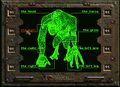 .. the eyes!
 -
Deathclaw clay model.
-
 Deathclaw clay model.
 -
 Mother deathclaw in Fallout.
 -
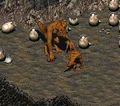 Mother deathclaw in Fallout 2.


Fallout 3 and Fallout: New Vegas
-
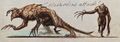 Concept art from The Art of Fallout 3.
 -
 Concept art from The Art of Fallout 3.
 -
 Concept art from The Art of Fallout 3.
 -
 Concept art from The Art of Fallout 3.
 -
 An alpha male deathclaw at Quarry Junction.
 -
 An alpha male deathclaw up close.
 -
 OK, that's a little too close.
 -
A deathclaw egg from Fallout: New Vegas.
-
Normale Todeskralle


Fallout Tactics
-
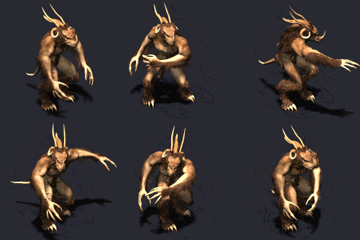 Hairy deathclaw attacking.
 -
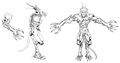 Hairy deathclaw concept art.
 -
 Hairy deathclaw render.
 -
 Hairy deathclaw model.
 -
 Baby hairy deathclaw model.
.gif)


Fallout: Brotherhood of Steel
-
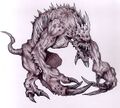 Experimental deathclaw concept art.
 -
 Experimental deathclaw render.
 -
 Experimental deathclaw art.
 -
 An elder experimental deathclaw in the Secret Vault.


Van Buren
-
 Deathclaw from Van Buren (early version).
 -
 Deathclaw from Van Buren (later version).


Fallout d20
-
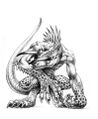 Deathclaw from Fallout d20.


